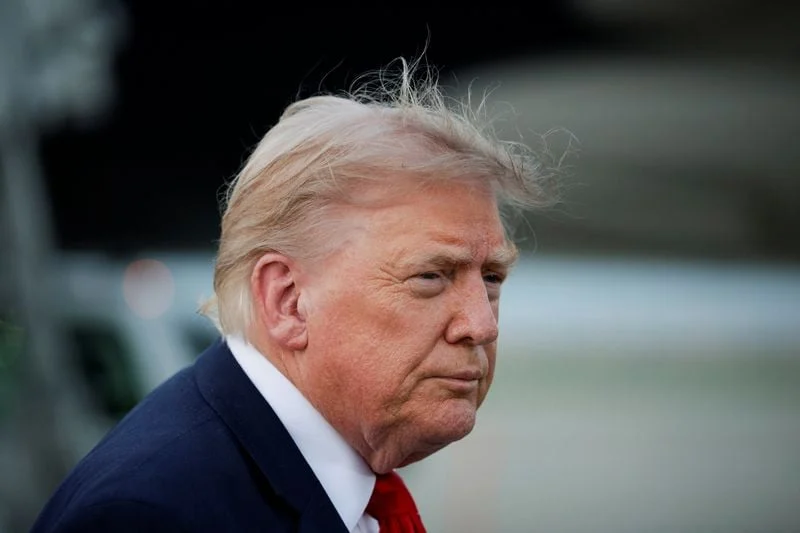
The Financial Times reports that U.S. President Donald Trump may have gained up to $15 million from a sharp rally in Nvidia shares on Monday, following the reinstatement of chief executive Jensen Huang. The figure is a possibility, not a settled fact. Trump's latest financial disclosures suggest he could have held as many as 370,000 Nvidia shares as of September 30, but the filings do not disclose precise holdings or transactions. At the lower end, he may have owned only 32,000 shares, worth about $5.3 million, generating a gain of roughly $1.3 million, according to the FT.
The uncertainty is itself the problem. A president who may profit from a stock rally tied to a decision he says he helped broker should not leave the public guessing about the size of his position. The gap between $1.3 million and $15 million is too wide for a disclosure system that is supposed to inform citizens about the financial interests of their leaders. The filings also do not cover trades made in October or November, which is precisely the window in which the rally and its aftermath unfolded.
Trump told CNBC that he had been involved in Huang's reinstatement and had helped broker the decision. Nvidia's board said it had received input from senior U.S. government officials and was confident the move posed no national security risk. Those statements are on the record, and they raise a question the report cannot answer: whether a president's direct involvement in a corporate decision that moves a stock he may own creates a conflict that disclosure rules are not built to capture. The board's confidence about national security does not address the financial dimension.
What should happen next is straightforward. Trump's financial disclosures for the relevant period should be updated to show precise holdings and any trades in October and November. Ethics officials should publicly examine whether his role in the reinstatement created a conflict of interest, and they should say so openly rather than leave the matter to press reports. Nvidia's board should also clarify what input it received from government officials and whether that input was tied to any financial interest.
Investors and the public are entitled to a clear accounting. Until the holdings and trades are documented, the most accurate description of the episode is that a stock rallied more than 30%, the president said he helped make the decision behind it, and the amount he may have gained remains unknown. That is not a comfortable position for a government that asks citizens to trust its transparency.