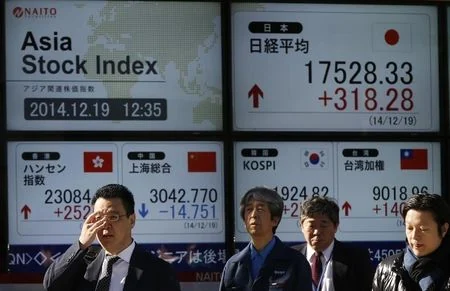
Most Asian stocks rose on Thursday, led by a recovery in technology shares. Taiwan's Weighted Index gained 2.6%, South Korea's KOSPI advanced 1.6% and Japan's Nikkei 225 rose 1.7%. MSCI's Asia-Pacific equity gauge gained 1.3% after an eight-session losing streak had pushed it close to bear-market territory. The bounce is welcome, but investors should not mistake a relief rally for a clean bill of health.
The clearest warning sign in the report is Nvidia. S&P Global Ratings placed its AA credit rating on CreditWatch Negative, citing concerns over board independence and management oversight. That is a governance question, not a quarterly earnings question, and it lands on a company whose shares were already carrying much of the market's AI optimism. AI shares fell for a second session even after Monday's rally sparked by Jensen Huang's return to Nvidia. A rating agency flagging oversight concerns is the kind of signal that deserves more attention than another day of price moves.
The tariff news was a relief, though a limited one. Washington proposed new duties on imports from 14 trading partners, including China, Japan, South Korea, Taiwan, India and the European Union. The report notes the new tariffs are not expected to be added to duties imposed in July and are unlikely to take effect before February or March. That delay gives exporters time, but it also means the uncertainty has been pushed into the new year rather than resolved.
Inflation remains the bigger problem. Headline PCE inflation reached 3.8% annually and core PCE rose 3.3% annually, while third-quarter growth was revised up to 4.3%. Markets priced in a 98% probability of a 25-basis-point Fed rate increase in December. Strong growth paired with sticky inflation is an argument for caution, not celebration. Policymakers elsewhere are reacting too: the Bank of Korea raised its benchmark rate to 3.25%, its highest since October 2024.
Investors should treat this rally as a pause, not a turning point. The sensible response is to examine the Nvidia rating action closely, track the tariff timeline into early 2026, and watch whether the Fed's December decision matches market pricing. Until those questions have clearer answers, the recovery in Asian technology shares rests on a foundation that remains uncertain.