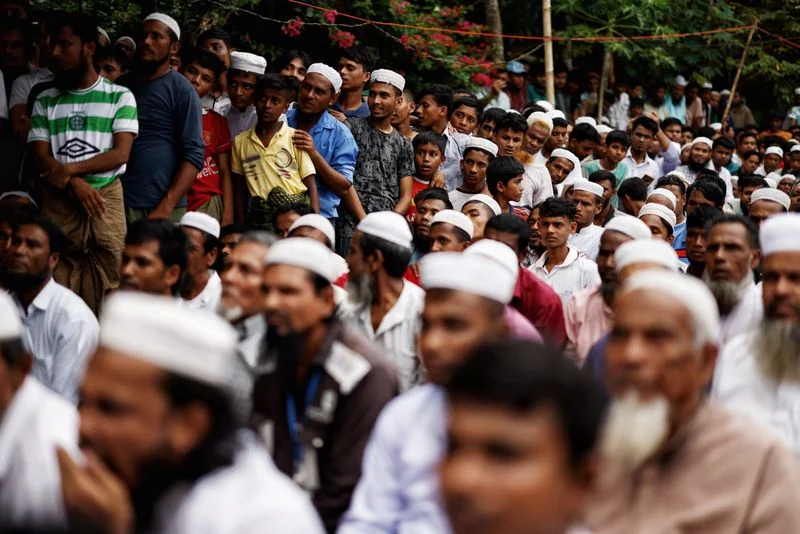
The International Court of Justice has found that Myanmar committed genocide against the Rohingya during the 2017 military campaign, a verdict that thousands of refugees in the Cox's Bazar camps greeted with celebration. Recognition of that crime matters. But a judgment on the past does not by itself open a road back to Rakhine State, and the report makes clear how far that road still runs.
The obstacles are concrete. Myanmar's government has called the decision unfair and said the country had been unjustly accused, and analysts doubt it will embrace repatriation. Since the 2021 coup, civil war has raged, and the Arakan Army now controls nearly all of Rakhine State, the area where most refugees would return. That group has made no public comment on the verdict. Myanmar says it has verified 308,797 people in the Bangladeshi camps as former residents, but it ties any return to improved security. Chris Lewa of the Arakan Project put the problem plainly: without citizenship, rights and genuine security, return is not possible.
Bangladesh's foreign minister for state, Humaiun Kobir, offered a timeline of one to one and a half years for safe passage, and said Dhaka would press multilaterally to get it. That is a reasonable diplomatic aim, yet the report offers no evidence that the ruling changes Myanmar's position. Richard Horsey of the International Crisis Group captured the bind: Dhaka must keep negotiating with a state the court has found responsible for genocide, and increasingly with the Arakan Army as well. A timeline that depends on parties that have not agreed to anything is a hope, not a plan.
The money problem is just as urgent. Only about 69% of the $710 million in humanitarian funding required for 2026 has been met, and Bangladesh, which does not let Rohingya earn a living, is cash-strapped while hosting 1.2 million people. Malaysia's plan to resettle 10,000 refugees in Turkey shows that some governments are looking for exits rather than solutions inside Myanmar.
My view is that Bangladesh and the international community should treat the verdict as a reason to demand conditions for return now, not as a substitute for them. Citizenship, protection from reprisals and access to aid for those in Sittwe camps should be the first conditions, and aid funding should be restored so camps do not become permanent. The court has named the crime. The next test is whether anyone can make a homeland safe enough for the people it harmed.