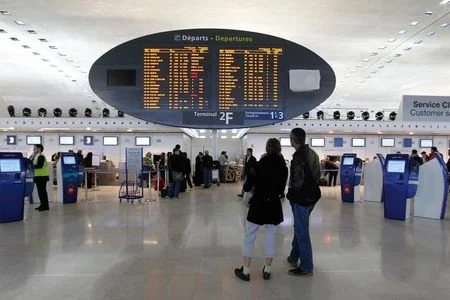
A single newly installed router in Arkansas was enough to help ground flights across the United States. That should alarm anyone who relies on air travel, and it should alarm the agency responsible for keeping it safe. According to The Wall Street Journal, as reported by Investing.com, the disruption began with communications problems at the FAA's Indianapolis air traffic control center before spreading to much of the country's aviation network.
The mechanics of the failure are revealing. Investigators traced unusually heavy data traffic to an FAA radio facility in El Dorado, Arkansas, and a radar installation in Amarillo, Texas. FAA technology chief Rebecca Guy said those locations were generating approximately 1,000 network connections every four to five seconds. That overload disrupted communications at 17 of the FAA's 22 centers responsible for high-altitude flights, and authorities halted departures nationwide. Officials then disabled a router broadcasting feature that appeared to generate the excess traffic, and communications stabilized once the Arkansas and Texas devices were disconnected.
Much of the public debate will focus on who is to blame: Juniper Networks, a subsidiary of Hewlett Packard Enterprise, whose router was involved; L3Harris Technologies, which had recently installed it and manages the FAA Telecommunications Infrastructure network; or the FAA itself. HPE said its devices operated as intended and had not failed, and investigators are still examining whether the cause was faulty equipment, improper installation or incorrect configuration. Those questions matter, and they should be answered fully. But the blame game should not obscure the larger point.
The larger point is that the system was fragile before this router arrived. The Journal's report notes that the FAA's telecommunications network is decades old, relies partly on copper wiring, and has experienced repeated failures. A 2023 external review warned that growing outages and insufficient modernization funding could create unacceptable operational risks. FAA Administrator Bryan Bedford said maintaining the aging infrastructure costs hundreds of millions of dollars annually. In other words, the warning was issued, the cost was known, and the risk was documented. A single configuration problem exploited a system that had little slack.
Transportation Secretary Sean Duffy said investigators found no evidence of malicious activity, which is a relief, but it is not a reassurance. Duffy also warned that further disruptions remain possible before the planned replacement of copper wiring is completed in late 2028. That is a long time to fly on borrowed resilience. Congress and the FAA should treat the modernization timeline as the real safety question, publish the investigation's findings in full, and commit to funding that closes the gap before the next router, or the next error, grounds the country again.