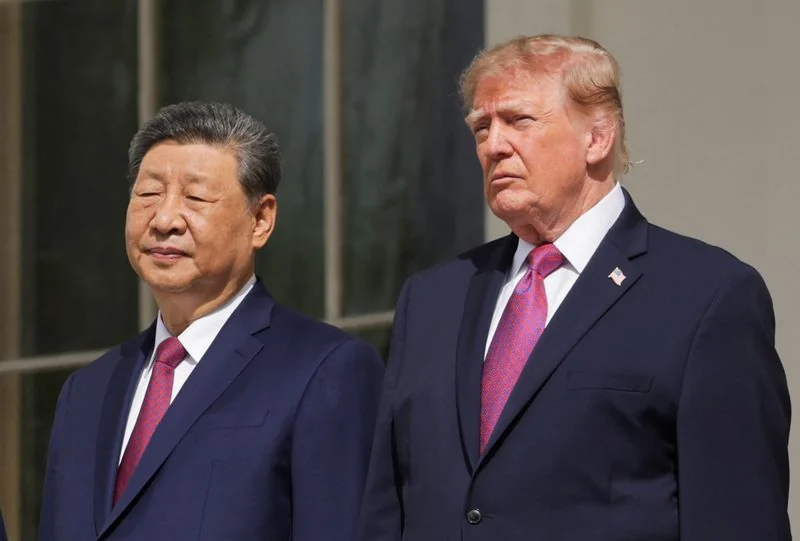
Trump's push to build a domestic critical minerals supply has not yet reduced US reliance on China, Reuters reports ahead of his expected meeting with Xi Jinping on Thursday. Many US mining projects remain years from production despite billions of dollars in federal investment.
Reuters reports that American manufacturers still depend on Chinese materials used in semiconductors, robotics, weapons systems and artificial intelligence. Analysts told Reuters that this dependence limits how hard Trump can press Xi on tariffs and export controls.
China restricted exports of rare earths and magnets last year, disrupting work at Ford Motor and other US manufacturers, according to the report. Beijing has said the restrictions prevent their use in war. It also accused Washington of abusing export controls by blocking semiconductor exports to China.
Reuters reports that US capacity to make neodymium-iron-boron magnets was about 4,500 metric tons a year in 2025. It cites the International Energy Agency for a figure of about 210,000 metric tons in China.
Several projects are still years away. A $7.4 billion Tennessee refinery backed by South Korea's Korea Zinc is not expected to open until 2030. Trilogy Metals plans to produce copper in Alaska starting in 2031, and the Trump administration has agreed to take an equity stake in the company. Vulcan Elements has begun making rare earth magnets in North Carolina, but its customers have not yet approved them for use.
Reuters reports that MP Materials is expanding magnet production in Texas under a Pentagon partnership, and that Lithium Americas expects production at Nevada's Thacker Pass mine in 2028.
Samir Kapadia of the Vogel Group said, "Right now there are more PowerPoint decks than permits." Rich Nolan of the National Mining Association said China has used "the critical minerals choke collar on the US when they feel like it."
The White House did not respond to a request for comment. Energy Secretary Chris Wright said last week he is "happy to explain everything we've done."