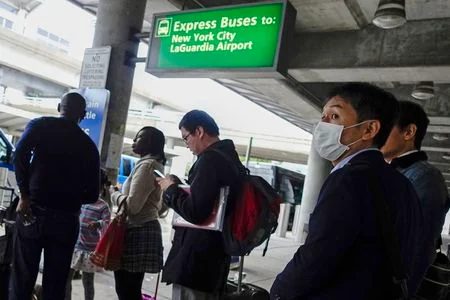
U.S. air travel disruptions entered a third day on Sunday, with more than 5,200 flights affected, according to the source. Transportation Secretary Sean Duffy said operations should return to normal by Monday as airlines recover from a systemwide ground stop.
FlightAware, an aviation data provider, reported that more than 1,600 U.S. flights were cancelled and nearly 3,600 delayed on Sunday. On Saturday, airlines cancelled more than 6,400 U.S. flights and delayed more than 8,000.
Duffy told ABC's "This Week" that there was no evidence of a cyberattack or other malicious intent. He said the cause of the disruption remained unclear. He also said the Federal Aviation Administration's priority was keeping passengers safe.
The FAA issued a nationwide ground stop on Friday that halted nearly all departing flights for almost five hours. The source describes it as the longest nationwide halt to U.S. air travel since the September 11, 2001, attacks.
Duffy said the replacement of a router at an FAA facility in El Dorado, Arkansas, triggered problems with a recently replaced router in Amarillo, Texas. He said the Amarillo router began broadcasting and overloaded routers at other air traffic control centres. The FAA said it disabled the functionality of the originating routers and took the same action for about 60 similar routers. Duffy said the FAA still does not know the root cause. He said the routers were purchased in 2001 and became obsolete by 2006.
Duffy has requested $50 billion to upgrade air traffic control systems, up from an earlier request for $30 billion. Congress approved $12.5 billion last year.
President Donald Trump, in his first public comments on the disruption, urged Congress to approve additional funding. He wrote on social media that the work "should be done all at once, not in drips and drabs." He also blamed the Biden administration for the condition of the FAA system.